
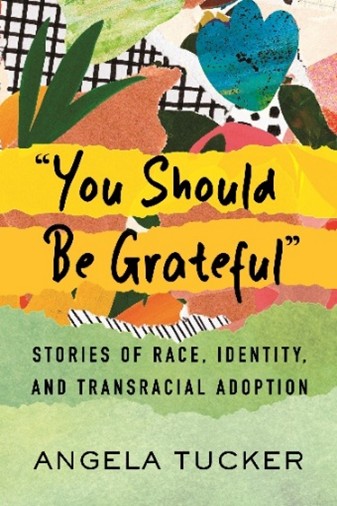
You Should Be Grateful: Stories of Race, Identity, and Transracial Adoption by Angela Tucker. Beacon Press, Boston, Massachusetts. 2022. Paperback, 194 pages $17.95.
Angela Tucker is the founder of the Adoptee Mentoring Society and the CEO of the Adopted Life LLC, where she offers regular consulting for agencies, media outlets, and adoptive families, hosts monthly Adoptee Lounges for adult adoptees, and spends her weekends mentoring adopted youth.
Angela Tucker is a black woman and she was adopted into a white family. Her entire life she heard the words, “your parents are so amazing for adopting you! You should be grateful.” She is grateful but it is more complicated than that. This is what she explores in her book. She looks at what adoption looks like for those who must live it.
As I read Angela’s book, I learned many things I didn’t know, perhaps because I am white and I am not adopted. For example:
- Of the approximately 135,000 adoptions are finalized every year in the US, between 1% and 5% of them end up being legally dissolved.
- Adoptees often hear they were adopted because their parents could not have children of their own. This makes them feel like a backup kid.
- The Centre for Economic Policy Research found that a non-Black baby is seven times more likely to “attract the interest and attention of potential adoptive parents than an African-American baby.”
- Amending adoptees’ birth certificates is a practice meant to make it seem as though the child was born to their adoptive parents. Amending birth certificates was first proposed in 1931.
- One of the main reasons adopted youth use social media to search for their biological parents is because the adults in their life have told them a diluted version of their adoption story.
You Should Be Grateful is a wise blend of purposeful storytelling, history, and critical thinking about the complex nuances inherent to adoption, with a focus on transracial adoptee perspectives. Angela courageously explores her own contradictory feelings about adoption (“I love my adoptive parents. And I wish I wasn’t adopted.”). She also offers an expansion beyond her own experience by including stories from some of the many other adoptees she has connected with over the years, especially teen and young adult adoptees.
This book is helpful to anyone who wants to learn more about transracial adoption, especially from the adoptees point of view.
arents wishing to be more intentional in sharing their story of faith with their grandchildren.